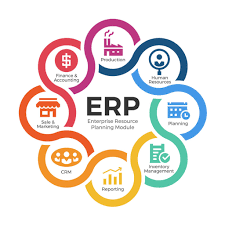
Choosing the right ERP (Enterprise Resource Planning) solution is a pivotal decision for small and medium-sized businesses (SMBs). In 2025 the market continues to shift toward cloud-first, modular systems with built-in automation, AI-assisted workflows, and consumption-friendly licensing. Below is a practical guide to the leading ERP options for SMBs this year — what makes them attractive, where they excel, and which kinds of businesses they suit best.
1. Oracle NetSuite — scalability and end-to-end cloud ERP
NetSuite remains one of the most widely adopted cloud ERPs among growing SMBs thanks to its broad feature set and strong multi-location, multi-currency capabilities. It’s designed to grow with a business, offering financial management, CRM, inventory, and ecommerce in one unified platform. For companies expecting rapid scaling or international expansion, NetSuite’s mature cloud architecture and ecosystem of partners make it a compelling choice. Top 10 ERP
2. Microsoft Dynamics 365 Business Central — familiar UX and tight Microsoft ecosystem integration
Business Central targets small and mid-market companies that want a modern cloud ERP with an interface users already understand (thanks to Microsoft 365 consistency). It’s particularly attractive for businesses that rely heavily on Microsoft products because of deep integration with Teams, Outlook, Power BI, and the broader Dynamics family. Microsoft’s 2025 release wave continues to add intelligent automation, finance improvements, and usability upgrades aimed at SMBs. For organizations invested in Microsoft technology, Business Central often delivers faster user adoption and simpler vendor management. Microsoft Learn+1
3. Odoo — modular, open-source, and cost-effective
Odoo’s open-source model and modular app store make it one of the most flexible and budget-friendly ERP options for small businesses and startups. You can start with essential modules (accounting, inventory, POS, CRM) and add more as you grow. Its low entry cost and community-driven ecosystem make customization accessible without the heavy consulting fees typical of legacy ERPs. Odoo is especially appealing to SMEs that want control over configuration and prefer pay-as-you-add flexibility. Odoo+1
4. Acumatica — cloud-native with consumption-based licensing
Acumatica stands out for its cloud-native architecture and a licensing model that often fits SMBs better than traditional per-user pricing. Many growing companies value Acumatica’s unlimited-user policy (where applicable) and strong usability ratings, which can lower adoption friction and total cost of ownership for teams that require broad access across roles. Analysts have recognized Acumatica for usability and value in SMB ERP assessments, making it a solid choice for mid-sized businesses that need flexible deployment and industry-specific editions. Acumatica Cloud ERP+1
5. Sage Intacct — finance-first ERP for service and finance-centric SMBs
Sage Intacct is often recommended when finance and accounting are the core priorities. Built with robust financial controls, multi-entity consolidation, and reporting capabilities, Intacct serves service companies, professional services, and financial operations that need cloud-based accounting sophistication without the overhead of an enterprise ERP. For SMBs where advanced financial management is the primary requirement, Sage Intacct delivers depth and compliance features. Alumio
What to prioritize when selecting an SMB ERP in 2025
Cloud vs. on-premise tradeoffs: Cloud ERPs dominate for SMBs because they reduce upfront infrastructure costs and simplify upgrades. However, businesses with special compliance or latency requirements should evaluate hybrid options. (See vendor-specific cloud features when choosing.) ERP Software Blog
Modularity and phased implementation: Start with core modules you need today (finance, inventory, sales) and add modules later. Modular systems lower risk and initial cost. Odoo
Total cost of ownership (TCO): Don’t focus only on license fees. Include implementation, integrations, training, and ongoing support. Consumption and user-unlimited licensing models can materially change TCO. Acumatica Cloud ERP
Integration and ecosystem: Consider prebuilt connectors (ecommerce, payroll, CRM) and how easily the ERP will integrate with your existing tools. Deep integration with analytics, e-commerce, or Microsoft/Google suites can speed ROI. Microsoft Learn+1
Usability and adoption: Systems that are intuitive—requiring less training—drive faster adoption and value. Look for vendors recognized by analyst reports for usability if your team is small or non-technical. Acumatica Cloud ERP
Implementation tips for SMBs
Map processes before you buy. Document current workflows and pain points; use these to evaluate how each ERP will change daily work.
Choose a phased rollout. Start with core modules and key users, then expand to other departments. This limits disruption and improves change management.
Budget for change management. Training, data cleanup, and process redesign are the most common sources of delay and extra cost. Allocate 10–20% of the project budget to training and internal enablement.
Use reference customers. Ask vendors for SMB references in your industry and contact them to understand real-world support and hidden costs.
Final recommendation
There’s no one-size-fits-all ERP — the best choice depends on your industry, growth plans, budget, and technology preferences. For rapid scaling and international operations, NetSuite is proven; for Microsoft-centric shops, Business Central offers seamless integration; for lean startups and budget-conscious SMEs, Odoo provides maximum flexibility; Acumatica is attractive when you need consumption-based pricing and broad access; and Sage Intacct excels when finance is the strategic focus. Use a shortlist of 2–3 vendors, run demos against your top 5 use cases, and request a realistic TCO comparison before committing. Alumio+4Top 10 ERP+4Microsoft Learn+4
If you’d like, I can: (a) build a customized shortlist based on your industry and number of users, (b) create a 1-page TCO template you can use to compare vendors, or (c) draft demo scripts and evaluation criteria to run during vendor presentations. Which would help most?